
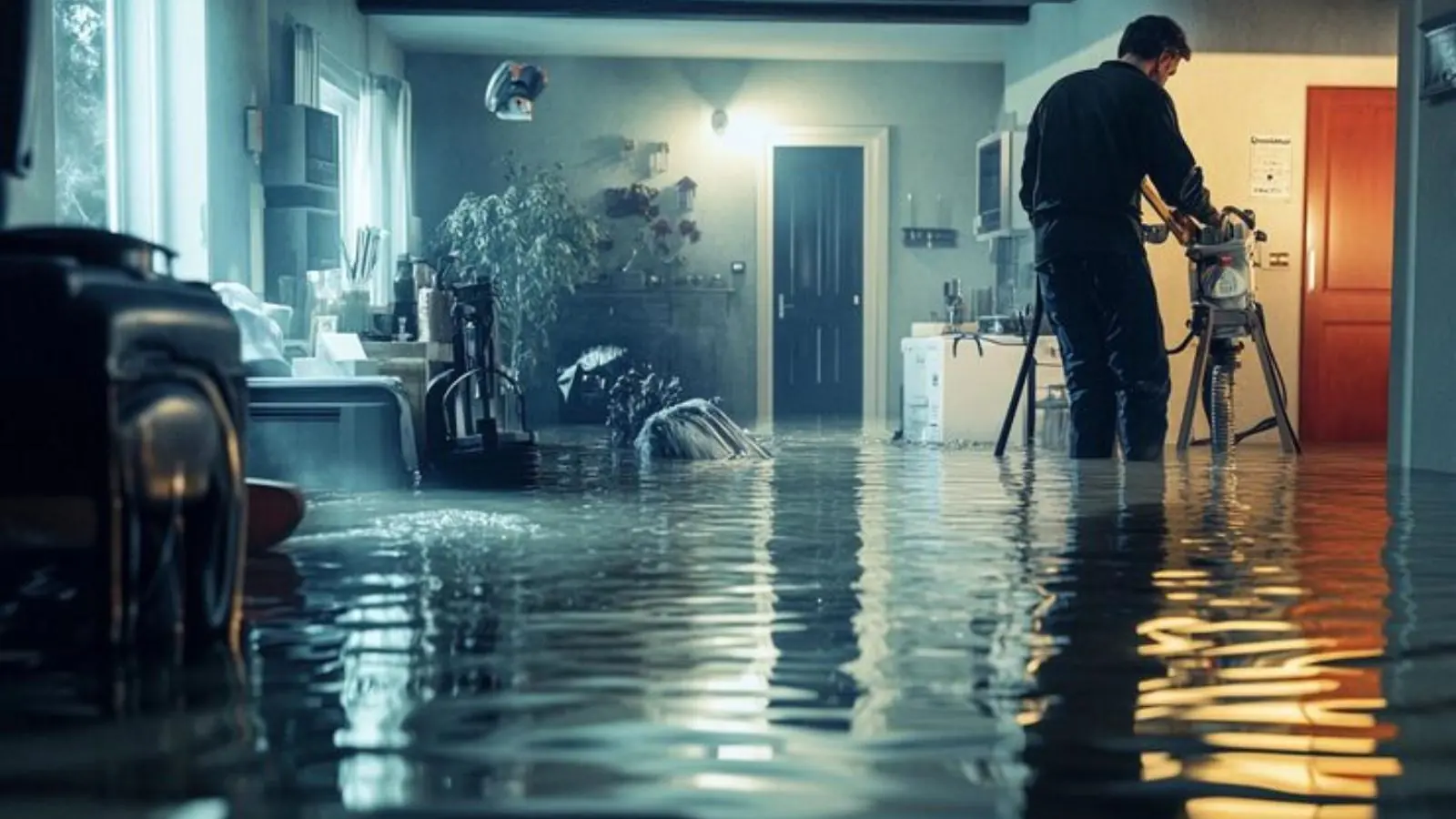
Water mitigation in Twentynine Palms, CA is the work done in the first 24 to 72 hours to keep a leak from turning into a rebuild. Our dispatch line is staffed 24/7. While you wait, close the main shut-off, lift rugs and boxes off wet floors, and keep everyone away from wet outlets.
Once a crew is there, they pump out standing water, find hidden moisture with meters, and set drying equipment before drywall swells and subfloor starts to warp. Acting early is usually the difference between drying a wall and replacing it.
My carpet is soaking and the wall feels cold and damp. What is happening?
Those are the usual signs that water has moved past the spot you can see. A squishy carpet, a cool baseboard or a spongy floor often means the pad, wall cavity or subfloor is holding water.
Stopping that damage is called water mitigation, and it is what this page covers. The job is to find the source, remove what can be removed, and dry the structure before swelling, staining and mold growth take hold.
Why a quiet desert house still needs fast action
Most of the little rain this area gets arrives with monsoon thunderstorms, so water often shows up in a rush. A house that stays dry for years can take on water the first time a storm stalls overhead, because door thresholds and wall bases may never have been tested before.
Dry air at an elevation of about 1,988 feet can make a floor look dry on top within a day while the pad and subfloor underneath stay wet. A surface check is not enough, and a moisture reading is.
Water is still spreading? The dispatch line is open around the clock.
☎ Call (760) 769-1159Signs water is still inside your walls and floors
Check for these before you decide the job is finished.
- Carpet or pad that still feels cool a day after the spill
- Paint that bubbles, or drywall that feels soft near the baseboard
- A musty smell in a closed room
- Floorboards that cup, lift or feel spongy
- A stain that grows or changes shape
How crews find the water you cannot see
Assessment starts with the source. Crews confirm the supply is shut off, then walk the structure with moisture meters, which read wetness in drywall, wood and concrete, and thermal imaging cameras, which show cool, wet areas behind finished surfaces.
Every reading goes on a moisture map, along with a dry reference reading from an unaffected wall. The map becomes the drying plan, and it tells everyone later when the job is actually done.
Crews also note the water category under ANSI/IICRC S500. The scale runs from Category 1, a clean source like a supply line, through Category 2 gray water from appliances, up to Category 3 sewage or floodwater from outdoors. Waiting can push water into a worse category.
Structural Drying
Structural drying is the longest part of mitigation, and it is where most of the equipment goes. Air movers push dry air across wet floors and wall bases, and LGR dehumidifiers pull the moisture back out of the air so it does not settle somewhere else. Wall cavities can often be dried through small openings at the baseboard, which can save the drywall.
Rooms are closed off so the equipment works on the wet area and not the whole house. Crews return to take readings with the moisture meter, usually daily, and move or remove equipment as the numbers fall toward the dry reference. Dry time depends on materials and readings. Small areas of carpet and drywall may take a few days, while thick subfloors, hardwood, plaster and wet insulation can take longer.
Wet material that cannot be saved is cut out early, because leaving it in place slows everything else. Carpet pad is the usual example. Removing it is part of getting the structure to a reading you can trust before rebuilding work starts.
Your options, with honest trade-offs
This table lays out the usual paths.
| Option | Works best when | Trade-off |
|---|---|---|
| Dry in place | Clean water, caught within a day or two, materials still firm | Needs daily readings and several days of equipment noise, but can avoid a rebuild |
| Remove wet materials, then dry | Pad, insulation or drywall has soaked through, or the water was gray | More demolition up front, but the rest dries faster and repairs are easier to scope |
| Wait and watch | A small spill on a hard floor, wiped up at once | Costs nothing at first, but hidden moisture can show up later as stains, smell or swelling |
Water is spreading right now: what to do before crews arrive
Find the main shut-off and close it. Finding it before an emergency saves time. If a water heater or washing machine is the source, close that appliance's own valve first.
Lift furniture legs off wet carpet and move papers and electronics up high. Photograph the damage for your insurer before moving anything heavy. Do not run a household vacuum on water.
If you cannot reach the problem without wading through standing water, the pumping and extraction crew handles that first step, and mitigation carries on from there. Water that came in from outside the house is covered under storm and runoff flooding.
Safety first: power, sewage and gas
If water has reached outlets, the panel or anything plugged in, stay out of the room. Use the breaker only when the panel is dry and you get there without stepping through water. If you smell gas, hear arcing or see sparks, leave, then call 911 and the utility before you call us.
Sewage is separate. With septic tanks serving most homes here instead of a city sewer, a backup frequently starts at the tank or leach field and calls for a septic contractor. Crews then handle contaminated materials in the house.
What changes the price of water mitigation
Mitigation pricing follows the size of the wet area and how many days the equipment has to run. Two houses with the same leak can come out very differently.
Water category
Clean supply water is simpler than gray or sewage water, which adds protective gear, disposal and antimicrobial treatment.
Wet area and materials
More wet rooms mean more equipment, and dense materials such as hardwood and plaster hold water longer.
Time since the leak
Water caught the same day often saves drywall and pad that would have to be removed a few days later.
Drying days
Equipment stays until readings reach the dry reference, so slow-drying structures need more days of monitoring.
A general note on insurance
Policies often respond to a burst supply line, which is sudden and accidental, and often do not respond to gradual leaks or neglect. Outside flooding is typically excluded unless you bought flood coverage separately. Check your policy or ask your insurer.
Want your real number? Phone dispatch, and the scope and price of drying get explained up front.
Frequently asked questions
Do you handle water mitigation emergencies at night or on weekends in Twentynine Palms?
Yes. Dispatch is answered around the clock, including nights, weekends and holidays. A crew goes out the same day when one is available, but no arrival time is promised, because it depends on crew availability, roads and how many calls are active. While you wait, close the main shut-off and stay clear of wet outlets.
My floor feels spongy and the wall is damp, but I see no puddle. Is that an emergency?
It can be. A spongy floor and a cold, damp wall usually mean water is trapped in the subfloor or wall cavity, even with nothing standing on the surface. Shut off the water if you can find a running source, and get moisture readings soon. If the dampness has lingered for days, read about how mold work is handled too.
What drying equipment do you use, and how long does drying take?
Crews use air movers, LGR dehumidifiers and moisture meters, with thermal imaging cameras to locate wet areas. Drying time depends on the materials and the readings. Small areas of carpet and drywall may take a few days, while hardwood, plaster, concrete slabs and wet insulation can take longer. Equipment stays until readings match the dry reference.
What is the difference between mitigation and water removal?
Removal pumps out standing water. Mitigation includes that and everything after it, such as shut-off, moisture mapping, drying and taking out materials that cannot be saved. A flooded floor usually needs both, and a damp wall with no standing water needs only the mitigation steps.
Do you serve towns near Twentynine Palms?
Yes. Crews work out of Twentynine Palms and cover the Morongo Basin too, including Joshua Tree and the west side. Give dispatch your address and what the water has reached.
Still have a question about your situation? Dispatch answers 24/7.
☎ Call (760) 769-1159