
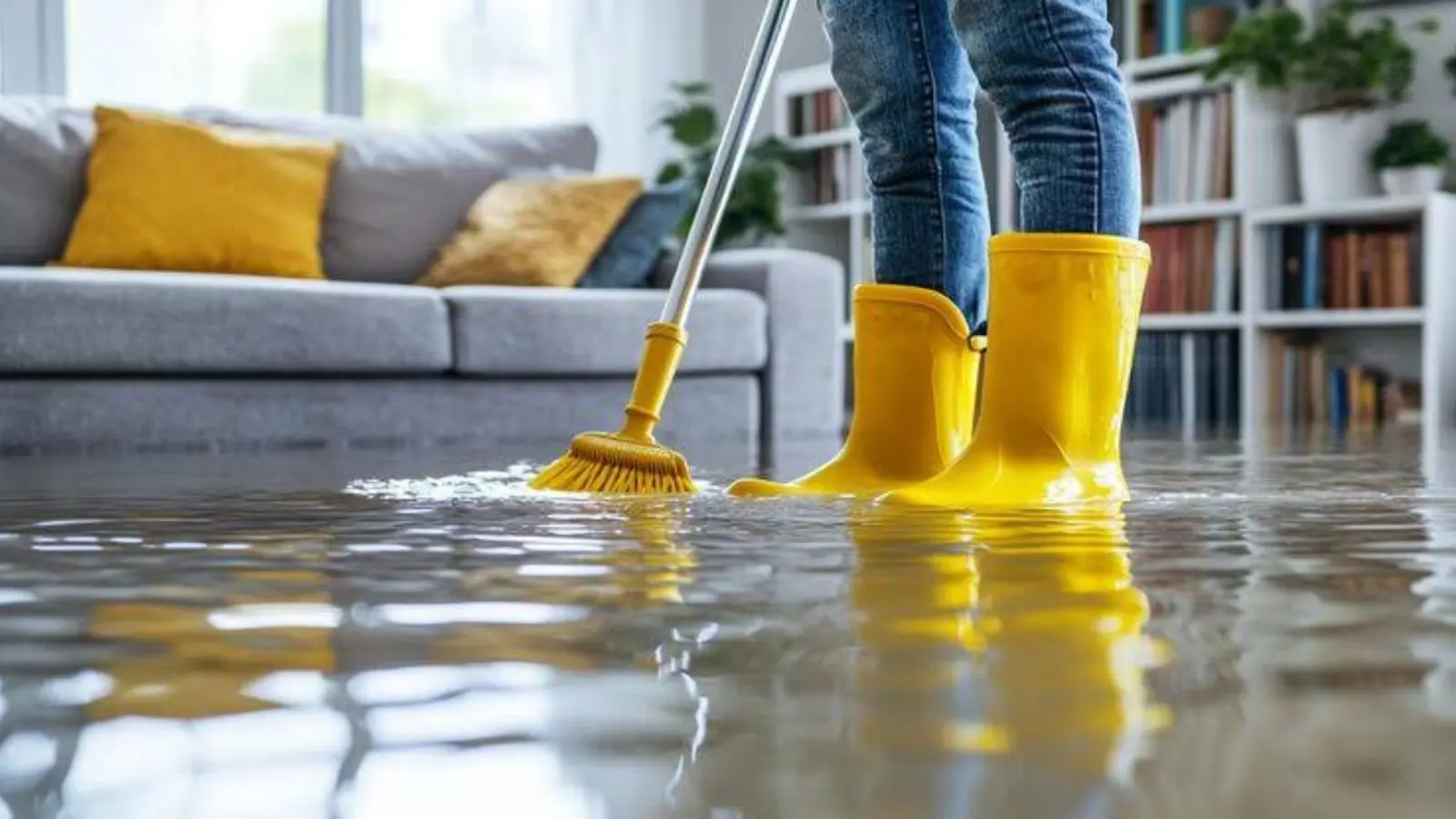
The pipe is shut off or the rain has stopped, but wet carpet, soggy drywall and debris are still in your house. That is where water damage cleanup in Twentynine Palms, CA begins, and our 24/7 line is open for it. Until a crew arrives, lift small items off wet floors, open interior doors for airflow, and photograph everything.
Cleanup is the removal and sorting step. It decides what is dried and kept, what is thrown out, and what gets sanitized.
The first 48 hours of cleanup
Speed matters because wet porous materials start to break down quickly. In the first day or two, crews extract standing water, pull up sodden pad and remove debris. They then check what remains with moisture meters.
A dry climate does not rescue a closed-up house. NOAA 1991 to 2020 normals show only about 3.87 inches of rain a year here, but water inside walls and under flooring can stay wet for days. If the job is bigger than a spill, drying and monsoon-season damage control runs in parallel. Crews also drive out to Yucca Valley from Twentynine Palms when needed.
What gets thrown out and what gets saved
The rule of thumb is porous versus non-porous. Porous items soak water in and are harder to clean, so they are the usual losses. Non-porous items can be washed and disinfected.
Water category changes the call. Clean supply-line water gives you more to save than gray or sewage water, where porous items are generally removed.
| Item | Usually saved or removed | Why |
|---|---|---|
| Carpet pad | Removed | Foam holds water and contamination |
| Carpet, clean water, caught fast | Often saved | Can be extracted and dried in place |
| Wet drywall | Removed if soaked | Paper face crumbles and holds moisture |
| Fiberglass insulation | Removed if wet | Slumps and stays damp |
| Tile, concrete, metal | Saved | Non-porous, cleans and dries well |
| Solid wood furniture | Often saved | Can dry out and be treated |
| Upholstery, mattresses | Often removed | Fabric and fill absorb deeply |
| Paper, books, cardboard | Removed | Pulp fails when wet |
Water is still spreading? The dispatch line is open around the clock.
☎ Call (760) 769-1159What the published standard says about wet materials
ANSI/IICRC S500 sorts water into categories by where it came from and how contaminated it is, and that sorting drives what happens to carpet, pad, drywall and contents. Before work starts, ask the crew how each material will be judged, kept or removed.
Carpet, pad, insulation and baseboards
Pad is nearly always a loss, because it acts like a sponge under the carpet. Carpet on top may be saved if the water was clean and the crew reached it quickly. The crew lifts a corner, extracts from both sides, and sets air movers underneath.
Wet insulation inside a wall holds moisture against framing, so wet batts are usually pulled. Crews often drill small holes or cut a strip about a foot above the water line to look inside. Baseboards are sometimes removed and set aside for reuse, which gives air a path into the wall cavity.
A thermal imaging camera confirms where wet spots still hide. Laminate and engineered boards swell and may not flatten again. If hardwood begins to cup, the fix belongs with rebuild and flooring repair after drying.
Contents pack-out in plain words
Pack-out means a crew carefully boxes and carries your belongings out of the wet area so cleaning and drying can proceed. Furniture, clothing, electronics and keepsakes are listed, wrapped and stored.
Items come back after the room is dry. Soft goods such as clothes and linens may be washed or cleaned off site, while damaged pieces are set aside for your decision.
Ask for an inventory list. It keeps track of what left your house, and it helps with any claim.
Sanitizing and deodorizing steps
After removal, crews wash hard surfaces and apply antimicrobial treatment to surfaces that stay in place. Odor control may use HEPA air scrubbers to filter the air, and sometimes a deodorizing treatment.
The smell usually fades fully only when the moisture is gone, so drying and deodorizing go together. Crews check readings with moisture meters before calling a room finished.
If you see dark spotting or the smell returns after drying, ask about mold inspection and testing. Health questions belong to your physician.
Photos and notes that help your claim
Photograph the damage before anything is moved, then again as materials come out. Wide room shots, close-ups of the waterline, serial numbers on appliances, and short videos all help.
Keep every receipt and write down dates. Do not throw away a damaged item until your insurer has had a chance to see it or you have photos of it.
Save any messages with your insurer and note who you spoke with. A clear record makes later questions easier to answer.
Water emergency in your house tonight
A flooded kitchen at 2 a.m. is still a cleanup call. Phone our 24/7 dispatch. Crews offer same-day response when available, with no promised arrival time.
If the water came in from outside, read about storm and sewage flood work too. That water needs extra care, so tell dispatch where it came from.
Safety first: power, sewage and gas
Do not wade through water that touches outlets, appliances or the panel. Power goes off only from a dry spot at the panel, and sparks or a gas smell mean leaving at once and contacting 911 or the utility.
If the water was sewage, stay out of the room and keep bare skin away from it. Wait for trained crews.
What changes the price of cleanup
Two homes with the same size of leak can get very different bills. Several things decide it.
Source and category
A clean supply leak is the cheapest to handle, with gray water and sewage costing more.
How much is porous
Soaked carpet, pad and drywall must be torn out and hauled off.
Hours before cleanup
Materials that were saveable on day one may be losses by day three.
Contents to move
Pack-out labor depends on how much needs to leave the room.
Access
Tight crawl spaces or stairs slow the work.
A general note on insurance
Appliance failures and burst pipes, being sudden and accidental, are often covered. Slow leaks or neglect often are not, and flood is usually excluded unless you have separate flood coverage.
Read your policy, ask your insurer what applies, and keep your photos and receipts ready.
Want your real number? Dial dispatch and you will hear the scope and price before crews begin.
Frequently asked questions
Do you handle water damage cleanup emergencies at night or on weekends in Twentynine Palms?
Yes. Dispatch is staffed 24/7, including late nights, weekends and holidays. Same-day response comes when crews are free, though an arrival time is never promised. The dispatcher will tell you what to move and what to leave alone while you wait.
How do I know if my carpet can be saved?
It depends on the water type and how long it sat. Carpet soaked by clean water and extracted fast often survives, while pad is usually replaced. Carpet touched by sewage or flood water is generally removed.
Do I need to throw out everything that got wet?
No. Hard, non-porous items like tile, metal and glass can be cleaned and kept. Porous items, such as pad, insulation and paper goods, are the common losses.
What is contents pack-out?
It is when a crew boxes, lists and removes your belongings from a wet room, so that the room can be cleaned and dried. Items return afterward.
Does cleanup include deodorizing?
Yes, where needed. Crews clean and treat surfaces and may run air scrubbers. Smells fade fully only once things are dry, so a persistent odor is worth reporting to the crew.
Still have a question about your situation? Dispatch answers 24/7.
☎ Call (760) 769-1159