
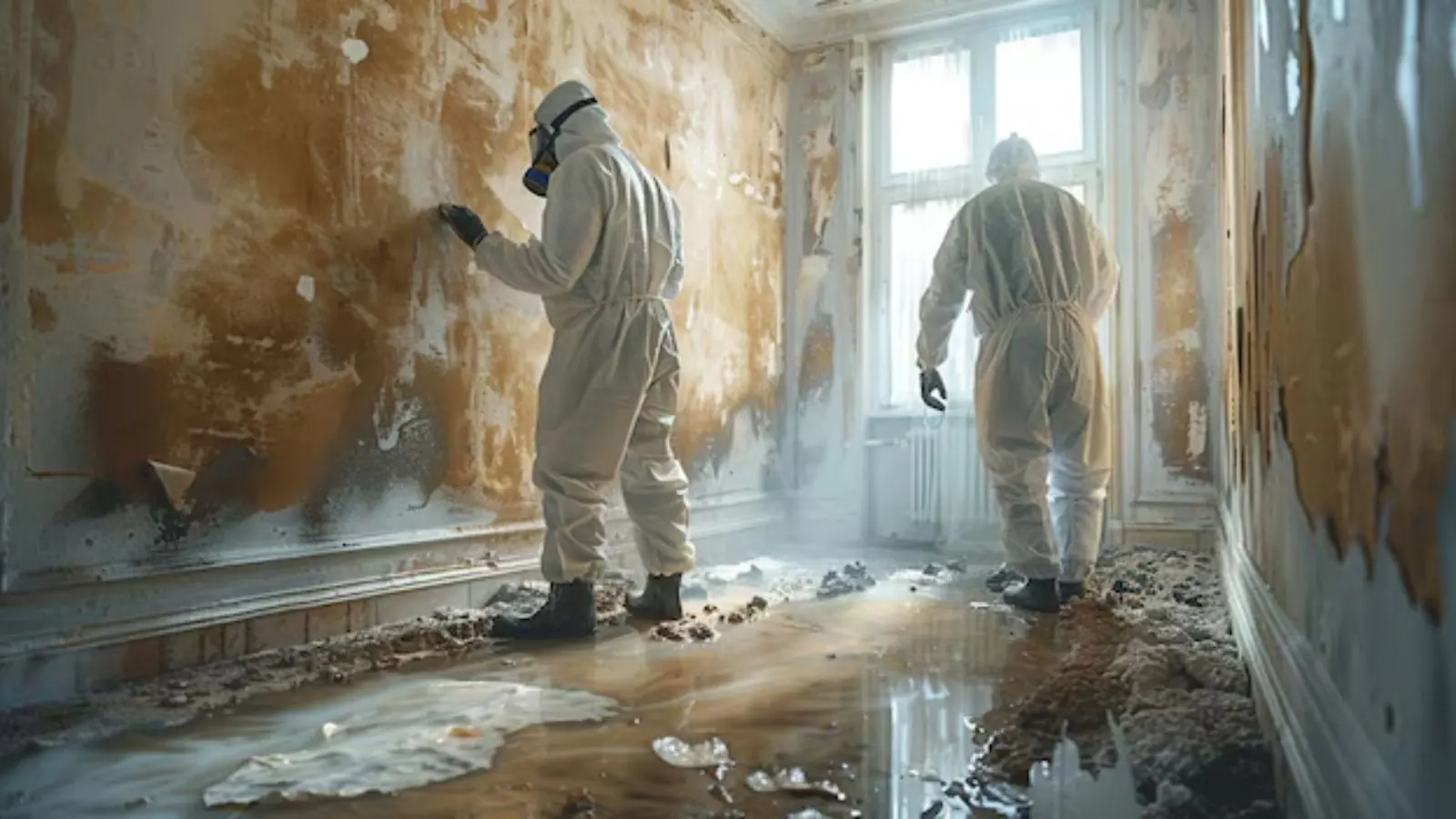
Mold remediation in Twentynine Palms, CA means sealing off the affected area, removing mold-damaged material and cleaning what can be saved, following S520 practice. Mold needs moisture, so the job is never only about the surface.
The stories we hear most start with an ordinary leak: a toilet, a sink, an AC condensate line, a roof or siding. The mold appears later, in a closet or a shower corner. This page covers what the work involves, what testing can and cannot tell you, and where we stop.
Musty smell, dark spots in the shower corner, stains in a closet after a leak
These are the three signs people describe most often. A damp, stale smell in a basement or closet. Dark spots where the shower ceiling meets the wall. A stained patch on closet drywall under a spot where a pipe or roof once leaked.
You cannot tell by eye whether a mark is mold, dirt or an old water stain. What you can tell is that moisture reached that spot. A mold remediation contractor finds that moisture, contains the area, removes affected material and cleans the rest. That is the trade you want when the question is no longer whether something got wet but what to do about it.
In a place this dry, a damp spot that lingers more often traces to plumbing, an AC line or the roof than to the weather. That makes finding the source the first step.
How containment, removal and cleaning work
Crews work to S520, the published ANSI/IICRC standard for mold remediation, and you should ask any company whether theirs do. The idea is to keep disturbed material from spreading to clean rooms. Plastic barriers seal the work area, a HEPA air scrubber filters the air and the crew removes damaged porous material before cleaning surfaces.
What gets removed depends on the material, since mold on a porous surface cannot be fully cleaned out of it. Antimicrobial treatment may be applied to surfaces that stay, with no health claims attached.
| Material | Usual approach | Why |
|---|---|---|
| Drywall and ceiling board | Cut out and replace | Paper and gypsum are porous |
| Carpet and pad | Remove and replace | Fibers and pad hold moisture |
| Insulation | Remove and replace | Cannot be cleaned in place |
| Framing lumber | HEPA vacuum, clean, dry | Solid wood can usually be cleaned |
| Tile, glass, metal | Clean in place | Non-porous surfaces |
| Furniture and contents | Case by case | Depends on material and condition |
Water is still spreading? The dispatch line is open around the clock.
☎ Call (760) 769-1159Mold Removal and Black Mold Cleanup
Black mold is a label, not a diagnosis. Color does not identify a species, and mold that looks black, green or white can be many things. Only lab analysis of a sample identifies what is growing, and even then the result is for the person who ordered it to interpret.
The work plan depends on how much material is affected and what it is growing on, not on the color. We do not make health claims about any mold. Questions about symptoms or exposure belong with your physician. The same goes for anyone in the house who asks whether a particular spot is a concern, since that is a medical question and not a cleanup question.
If you see growth after a leak, keep the area closed off, keep fans from blowing across it and avoid scrubbing it dry, since that can spread material to other rooms. A call to schedule an inspection is a better first move than a cleaning product.
Mold After Water Damage
Mold follows wet materials that stay wet. That is why the real defense is fast drying after a leak, starting with the drying work in the first days. If the source is still dripping, nothing else matters yet, because new moisture undoes any cleaning.
The leak has to be fixed first, by a plumber, a roofer or whoever owns that repair. We then remove the damaged material, and the rebuild, such as new drywall and paint, is covered on the water damage repair page. If water is standing now, emergency water removal comes before any mold work.
Removal does not fix a moisture source. If the source continues, mold can return, so confirmed dry readings come before anyone rebuilds. In a dry climate the damp usually hides in places the weather never reaches, like a wall under a bathroom or a closet beside an air handler. A thermal imaging camera helps trace those paths, and the readings show whether the area has actually dried or only looks dry.
Mold Testing and Inspection
An inspector walks the area with a moisture meter and a thermal camera to see where water traveled and what is still wet. Testing, by air or surface samples sent to a lab, tells you what spore types were present at that moment, usually compared with an outdoor sample. It is a snapshot, not a verdict on your home.
Independent clearance testing happens after remediation. Independent means the tester is not the remediation company, so the company that cleaned does not grade its own work. The tester inspects and may sample, then reports whether the area meets the standard set before work began.
No testing result can promise that a lender, buyer or insurer will accept it. Ask your lender or agent what documentation they require before you hire anyone. If a condo association or landlord is involved, ask who is allowed to order the testing, because the paperwork may need to come from a specific party.
What happens on the first visit
A technician looks at the area, takes moisture readings and asks about the leak history. You get an explanation of what was found and what the work involves.
Have these ready. If you live closer to Joshua Tree, the same visit process applies, and the Joshua Tree service area page explains how crews get there from Twentynine Palms.
- Where and when the leak happened, and who fixed it
- Whether the area was ever carpeted, remodeled or opened
- Any lender or association paperwork that sets requirements
- Photos of what you saw first
What changes the price of mold remediation
Two jobs that look alike on the surface can differ a lot. The price follows the amount of material affected and how much containment it needs.
Size of the affected area
A single closet wall is a smaller job than a basement ceiling and two bedrooms, and the material removal and cleaning scale with it.
What it is growing on
Drywall and carpet get removed, while framing and tile get cleaned, so the mix of materials moves the price.
Containment and air filtration
Barriers, negative air and HEPA air scrubbers add setup and equipment days.
Access
Attics, crawl spaces and tight ceilings take more labor than an open room.
Testing and rebuild
Independent testing is billed by the tester, and rebuilding afterward is separate repair work.
A general note on insurance
Mold coverage varies widely by policy. It is more often covered when it results from a sudden, covered water loss than when it comes from a long-running leak or poor upkeep, and some policies cap or exclude it.
Before hiring anyone, go through the policy or put the question to your insurer. Keep photos, your inspection notes and any testing report.
Want your real number? Phone us and dispatch explains scope and price ahead of any mold work.
Frequently asked questions
I smell something musty but see nothing. What should I do?
Think about where water could have gotten in, such as a past leak, a condensate line or a damp closet wall. A moisture meter and thermal imaging camera can find wet material behind a surface that looks fine. Call and describe the smell and the spot, and we can set up an inspection.
Do I need mold clearance for a home sale or a loan?
Some buyers and lenders ask for documentation that mold was removed, and requirements differ. Independent clearance testing is one common form. No one can promise it will satisfy a particular lender, so ask the lender or your agent what they accept before work starts.
Does the state license mold work?
Ask whether your state licenses mold work. Rules differ by state, and licensing for testing and for removal can be separate. Ask any company what it holds and whether its crews follow S520.
Can restoration stand in for waterproofing or a plumber?
No. Restoration will not waterproof a building, and plumbing is not our trade. A leaking pipe needs a plumber, and a wet foundation or basement wall needs a waterproofing or foundation contractor. We handle the damaged materials afterward.
Do I need testing before remediation?
Not always. Visible growth after a known leak can be inspected and scoped without a lab test. Testing helps when you do not know what you are seeing or when someone requires paperwork, and an independent tester is the usual choice for that.
Will insurance pay for mold cleanup?
It depends on your policy and on how the moisture got there. A sudden accidental loss is often covered, while a slow leak often is not. Check your policy, and if a water loss started it, ask whether cleanup after the water damage is part of the same claim.
Still have a question about your situation? Dispatch answers 24/7.
☎ Call (760) 769-1159