
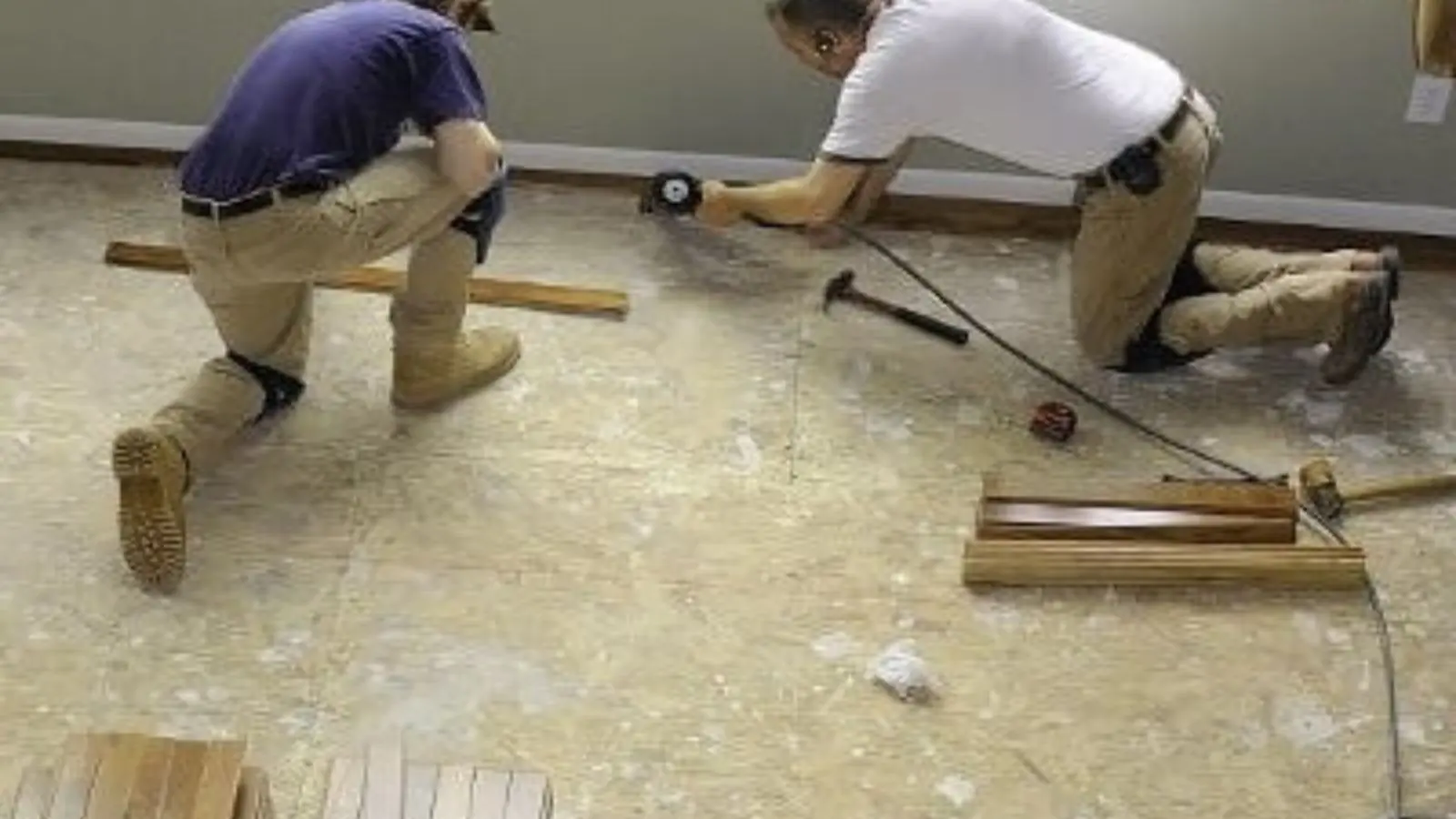
Water damage repair in Twentynine Palms, CA is the rebuilding that happens once everything is dry. It means cutting out and replacing drywall, insulation and baseboard, deciding whether a floor can be saved, then priming, painting and resetting cabinets.
Repair comes second for a reason. Close up a wall that is still wet and the new board just traps the moisture. The dispatch line runs 24/7, and the first visit is about readings, so you know what stays and what goes.
Ceiling and Wall Water Damage Repair
A roof leak after a monsoon storm is the classic ceiling call here. In a desert climate where yearly rain is only a few inches, one storm can be the first real test a roof has had in months. A roof can sit dry for months and then take its hardest test in one afternoon, so a brown ring after the first big storm usually points to flashing or a seam that was already marginal.
Siding and window leaks show up lower. Water runs behind the siding or around a window frame, soaks the insulation in the stud bay and appears as a stained or bubbling kitchen wall, sometimes weeks later. The drywall is only the visible layer. The bottom plate and the insulation behind it need readings before anything gets closed back up.
Bathroom ceilings usually trace to a supply line, a shower pan or a toilet on the floor above. A soft spot or a small hole means the board has lost its strength, so stay out from under it, because trapped water can drop all at once. A collapsed ceiling is a stop-and-call situation.
If water has reached a light fixture, outlet or panel, stay out. Reach for the breaker only across a dry floor, and let the utility or 911 hear about any electrical danger first.
| What you see | Usual cause | How the repair usually goes |
|---|---|---|
| Brown ring after a storm | Roof flashing, shingle or seam leak | Roofer fixes the source, then wet board and insulation come out, the cavity dries, new board goes in, stain-blocking primer and paint |
| Stained wall under a window | Siding or window flashing leak | Open the wall, take readings, replace wet insulation and board, repaint |
| Bubble on a bathroom ceiling | Supply line, shower pan or toilet above | Plumber stops the leak, wet board is removed, framing dries, board and finish are replaced |
| Soft spot or small hole | Saturated drywall that lost strength | Cut back to dry, solid material, patch or replace the section |
| Sagging or fallen ceiling | Water weight trapped above the board | Controlled removal, drying of joists and insulation, new board and texture |
Hardwood floor cupping: dry in place or replace
Cupping means the board edges rise higher than the center, because the underside took on more moisture than the top. The usual causes in a house like yours are a washer supply valve that failed, a dishwasher line, or an AC condensate line that backed up and ran under the floor for days.
A moisture meter decides the next step. We compare readings on the affected boards with boards of the same species in a dry part of the house. If the numbers drop with air movers and dehumidifiers and the boards settle, the floor can stay and be sanded and refinished later. If boards are crowned, buckled or the subfloor will not dry, replacement is the honest answer.
Water is still spreading? The dispatch line is open around the clock.
☎ Call (760) 769-1159The standard repair follows
Rebuilding too soon is the classic mistake, and ANSI/IICRC S500 puts verified drying ahead of reconstruction. Ask the contractor what readings will show the framing and subfloor are dry, and request them in writing before drywall goes back up.
What a written scope and price explanation covers
Most callers want a quote first, and that is a fair request. A number given over the phone would be a guess, because the cost sits behind the surface. After an inspection with readings, the price is explained in writing before any work starts.
The scope should name every room and material involved, so nothing is vague. It also separates the drying and demolition from the rebuild, which lets you see what each stage costs and decide on the order. If your insurer needs a document, the same scope and the readings behind it give the adjuster something concrete to review.
- Which rooms and surfaces are affected, with the readings behind them
- What gets removed and what gets dried in place
- The rebuild items: drywall, insulation, trim, flooring, texture, paint, cabinets
- What is outside the job, such as roof, plumbing or siding work by another trade
- How hidden damage found after opening a wall is handled and priced before it proceeds
Where repair stops: roofing, plumbing and waterproofing
Restoration does not replace waterproofing, and roofing and plumbing are other trades. If the roof leaked, a roofer repairs it. If a supply line failed, a plumber fixes it. If water keeps entering through a foundation or below-grade wall, a waterproofing or foundation contractor is the right call.
Rebuilding a ceiling under an open roof leak just repeats the loss, so fix the source first. If the damage is still spreading, the first job is drying and stopping the damage, and wet materials that must come out first fall under debris and contaminated material removal. Bigger rebuilds may need permits, which the city building department can confirm.
Staying safe while repairs are underway
Rebuilding means opening walls and ceilings, which exposes wiring, pipes and insulation that were hidden.
- Confirm that circuits in the work area are off before anyone cuts into drywall.
- Keep a clear path around wet flooring, where footing can fail without warning.
- Mark any area where a ceiling has sagged and keep people out from underneath it.
- Close off the work zone with plastic sheeting so dust does not travel into living space.
- Ask the crew to show you readings that prove the framing is dry before it is closed up.
The order of a rebuild
Good repairs follow a sequence, and skipping a step shows up later as peeling paint or a stain that returns. Neighbors in Yucca Valley and the rest of the Morongo Basin run the same sequence.
- Source fixed and confirmed dry by readings
- Damaged board, insulation and flooring removed
- Framing checked, cleaned and left to dry fully
- New insulation, board, taping and texture
- Primer, paint, trim, cabinets and flooring
What changes the price of water damage repair
Two houses with the same stain can have very different bills. The price follows what the water touched and how much has to be rebuilt.
Area and materials
A wet ceiling patch costs less to redo than a full wall of cabinets and flooring. Material type matters, since drywall, plaster and engineered wood each cost differently to replace.
How far the water traveled
Wet insulation and framing behind a wall add removal and drying work that the stain never showed.
Finish matching
Texture, paint color and trim style must blend into what is already there, and that takes extra coats and sometimes a whole wall.
Access and height
A two-story ceiling or a tight cabinet run needs more labor and staging than a ground-floor wall.
Hidden damage
Opening a wall can reveal more wet material. That gets explained and priced before it proceeds.
A general note on insurance
Homeowners policies often respond when a pipe bursts or a storm rips roofing, because the loss was sudden and accidental. A leak that dripped for months, or damage from neglect, often is not. Floods are usually left out and require their own flood policy, so verify with your insurer.
Photos taken before removal, moisture readings and a written scope all help when you file a claim. We document what we find, but the coverage decision is between you and your insurer.
Want your real number? Phone dispatch and the rebuild scope and price get laid out before a single board is touched.
Frequently asked questions
Can you just patch a water stain on my ceiling?
Only if readings show the board and insulation above are dry and the leak is fixed. Painting over a wet ceiling hides the problem and usually the stain comes back through the paint. Meter readings and a thermal scan settle whether a patch will do.
Does wet insulation have to be replaced?
Often yes. Wet batt insulation loses its value and holds moisture against the framing, so it is usually removed and replaced after the cavity dries. Dense or closed-cell types are judged by readings.
How long after drying can the rebuild start?
The rebuild starts when readings on the framing and subfloor are back to normal, not on a set day count. Drying time depends on the materials, the humidity indoors and how long the water sat. If mold is also found, that is handled first through mold remediation.
Do you fix the roof or the leaking pipe?
No. Restoration is not roofing or plumbing. We rebuild what the water damaged, and we can tell you what we saw so a roofer or plumber knows where to look.
Do I need a permit for repairs?
It depends on the scope of the work. Before a large rebuild, put the question to the city or the county, and we can outline the planned work so your question is specific.
What if the water came from outside the house?
Runoff or flood water is treated as contaminated water, which changes what can be saved. See flood damage restoration for how that is handled.
Still have a question about your situation? Dispatch answers 24/7.
☎ Call (760) 769-1159