
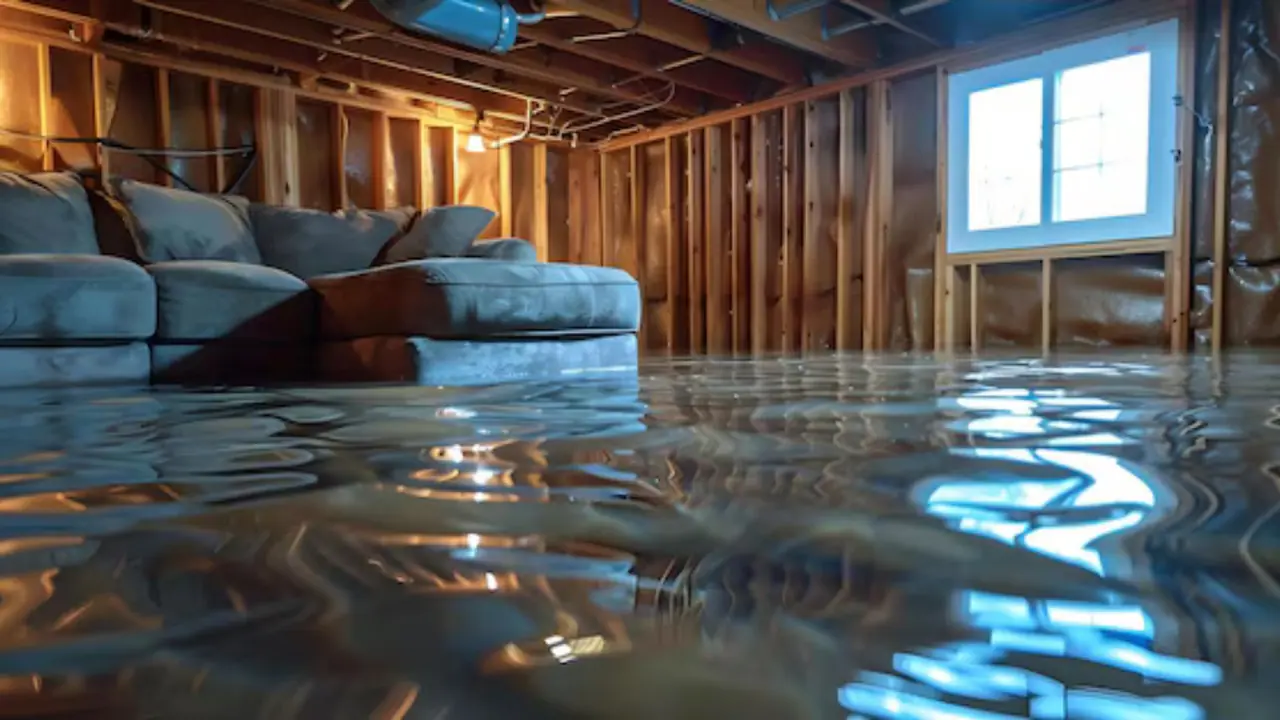
Mold mitigation in a basement is mostly a water job. The goal is to bring moisture in the structure back to its normal dry level so growth has nothing to feed on. Cleaning and removal come after, and only when the readings show the area is under control.
The same logic applies to any low room in Twentynine Palms, CA, and to garage corners, closet walls, crawl spaces and the edge of a slab. If your house has a basement or cellar, the physics are identical, and only the access is harder.
This guide covers the tools a crew brings, how a drying plan is set, and what the numbers should look like when it works. It also covers what mitigation cannot do, so you can judge a scope of work before you agree to it.
Why the target is moisture, not mold
A fogging treatment or a coat of sealant leaves damp materials damp. Mold needs moisture, so mitigation goes after the water. Stop the source, remove standing water, then pull moisture out of drywall, framing, concrete and contents. EPA's guidance is to get wet areas and belongings dry inside 24 to 48 hours, so the first day sets the pace.
ANSI/IICRC S500, the published water damage standard, frames drying as a documented process of assessing, extracting, drying and verifying. Mold removal then follows S520. Put that question to any company you are considering.
Reading the space before any machine runs
A crew starts with the water itself. In S500 vocabulary, a supply line leak is Category 1, a washing machine or dishwasher overflow is Category 2 gray water, and sewage or floodwater from outside is Category 3. Standing water can slide into a worse category over time, and each category calls for a different plan.
Next comes mapping. The tech scans walls and floors with a thermal imaging camera to spot cool or warm patterns, then confirms each suspect area with a moisture meter and writes the readings on a sketch of the room. The camera points to where to look. The meter gives the actual number.
Need a hand with water or mold right now? Dispatch is open 24/7.
☎ Call (760) 769-1159The equipment, tool by tool
Each machine answers a different question. If a quote lists equipment without saying what it is for, ask.
| Tool | What it does | What it tells you |
|---|---|---|
| Moisture meter | Measures moisture in drywall, wood and masonry | Whether a surface is wet compared with a dry reference |
| Thermal imaging camera | Shows surface temperature patterns | Where wet areas may hide behind finished walls |
| Thermo-hygrometer | Measures air temperature and relative humidity | Whether the air can take more moisture |
| Extraction unit, submersible pump | Removes standing water | That bulk water is gone and drying can start |
| Air movers | Push air across wet surfaces | How fast surfaces are releasing moisture |
| LGR dehumidifier | Pulls moisture out of the air | Humidity trend and how much water is leaving the room |
| HEPA air scrubber | Filters fine dust during demolition | Nothing about moisture, it supports containment |
| Containment barriers | Separate the work area with sheeting | Whether mold work is isolated from the rest of the house |
How a drying plan gets set
A plan is built from the room, not from a formula pasted on every job. The crew sizes dehumidifiers and air movers to the volume of the space and the amount of wet material. The steps usually run in this order:
- Find and stop the source, and name the water category
- Extract standing water and remove anything that cannot be dried, such as soaked pad or insulation
- Record starting readings and pick dry targets from unaffected materials of the same type in your house
- Place air movers and dehumidifiers, and set up containment where mold is present
- Revisit daily, log readings and move equipment as walls dry
How the readings show it worked
The dry target comes from your own home. A crew measures the same material in a part of the house that never got wet and uses that number as the goal. Equipment comes out when the wet materials reach it, not when a calendar says so.
Daily logs should show readings falling visit by visit. A number that stops falling points to a source still feeding the wall or a wet pocket nobody has opened. Room humidity should also settle back to what is normal for your house, and you are entitled to see the log.
Where mitigation stops
Drying is not waterproofing, and it is not a plumber. If a pipe is leaking, a plumber fixes the pipe, and if runoff keeps entering at a wall, a contractor has to change how water reaches the foundation. Mitigation removes the water that got in, and it cannot stop the next storm.
When drywall or insulation is too far gone to dry, it comes out, and rebuilding follows under water damage repair. Visible growth on those materials moves the job into mold remediation under S520 practice. For the first 24 to 72 hours, water mitigation is the service that sets up this drying work.
Twentynine Palms local note: drying needs power
After the 2014 flash flood, local news reported at least 14 power poles down and about 2,000 homes and businesses without power. Dehumidifiers and air movers run on electricity, so an outage after a storm can delay drying while materials stay wet. Ask any crew how it plans for power, and ask whether it can stage equipment once service returns.
That same report described swift-water rescues of drivers on Adobe Road and Bagley Road. Do not drive through a flooded wash to check on a lower room, because the NWS rule applies here too: turn around, don't drown. The room can wait for the water to drop, and a wet panel or outlet inside it should stay untouched.
Source type: NWS safety slogan, and a 2014 flash flood report from Z107.7 local news
Frequently asked questions
Will a power outage after a Twentynine Palms storm stop the drying job?
It can pause it, since the main drying machines need electricity. Tell the dispatcher the power is out, and ask the crew what it can do to remove standing water and open wet walls in the meantime. Do not run extension cords through standing water.
How long does drying take?
It depends on the materials, the amount of water and how fast the source was stopped, so no honest crew can promise a number of days in advance. The daily readings decide when equipment comes out.
Can I dry the room with a hardware store fan and dehumidifier?
For a small, clean spill on a hard surface, that may be enough. If water soaked into drywall, framing or concrete, or came from a Category 2 or 3 source, you need moisture meter readings to know whether the walls are actually dry.
Does insurance pay for mitigation?
Coverage turns on the cause. A sudden burst is treated differently from a slow leak, and flood water generally needs its own flood policy. Keep the drying logs, and go through your policy with your insurer. If you split time between towns, we also serve Joshua Tree and Morongo Valley.
Talk it through with dispatch any hour of the day.
☎ Call (760) 769-1159