
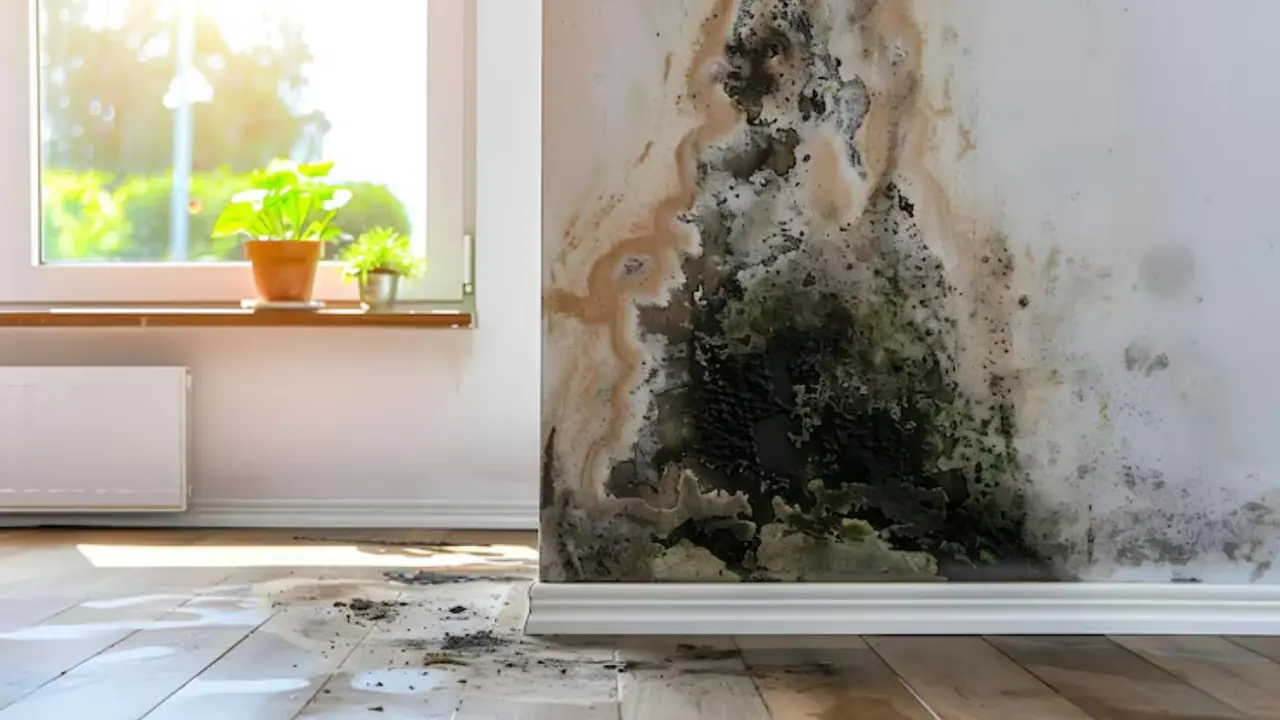
Mold rarely announces itself. More often you notice a smell, a stain that was not there last month, or paint that has started to bubble. This checklist walks through the house room by room so you can find mold, or the moisture that would feed it, in Twentynine Palms, CA.
A damp spot inside a house nearly always has a specific source. Hunting for that source is faster than staring at the stain.
Bring a flashlight, your phone for photos and, if you own one, a moisture meter. Note what you find in each room, with the date, for the plumber or crew later.
Before you start: smell, sight, touch and a meter
Smell is a prompt, not a map. A musty or earthy odor tells you to look harder, but it rarely tells you where. Sight covers stains, rings, fuzzy or speckled patches and peeling paint. Touch is the quickest test of all, since soft or cool, damp material is a flag.
A moisture meter adds numbers. Pin meters read at depth, and pinless meters scan a wider surface. Take a reference reading on a wall you know is dry, then compare the suspect area to it. Different materials read differently, so ask a professional to interpret what you get.
A meter reads moisture, not mold. A high reading says water is present, and that is the finding that matters.
The checklist at a glance
Print this or keep it on your phone, and tick each area off as you go.
| Area | Where to look | What counts as a flag | Next step |
|---|---|---|---|
| Bathroom | Base of the walls, tub surround, around the toilet, ceiling fan area | Soft drywall, lifting caulk, loose tile, speckled ceiling | Dry-reference meter check, then plumber or restoration company |
| Closets | Exterior walls, closets sharing a wall with a bathroom or water heater | Damp cardboard, musty smell, stained baseboard | Pull items off the wall and re-check in a few days |
| Under sinks | Back panel, floor of the cabinet, supply lines, P-trap | Swollen particleboard, crust on fittings, drip stains | Plumber for the fitting, then dry and measure |
| AC condensate line | Air handler, drain pan, the line to where it ends | Water in the pan, rust, a cracked or disconnected line | HVAC technician, then check ceilings below |
| Evaporative cooler | Pads, pan, float valve, drain and overflow lines, roof curb | Mineral crust, rusted pan, wet ceiling beneath | Fix the leak, then measure surrounding materials |
| Attic and ceilings | Underside of roof decking, vents, ductwork, ceiling stains | Brown rings, sagging, damp insulation, daylight at penetrations | Roofer for the source, restoration company for wet materials |
| Garage | Bottom foot of walls, slab edge, water heater, stored boxes | Efflorescence, damp base plates, wet cardboard | Find the water path, dry and measure |
| Crawl space, if present | Framing, insulation, pipes, soil, vapor barrier | Dark framing, fallen insulation, pooled water, dripping pipes | Stop if access is tight or wiring is wet, and call a professional |
Need a hand with water or mold right now? Dispatch is open 24/7.
☎ Call (760) 769-1159Bathrooms, closets and under the sink
Press a thumb into the wall at the base of the toilet and along the bottom of the tub or shower surround. Soft drywall, caulk pulling away or tile that moves under your finger means water has been getting behind the surface. Check the ceiling below an upstairs bathroom, too.
Open the vanity and shine a light at the back and floor. Follow each supply line to its valve and look for white or green crust, drips on the P-trap, or a cabinet floor that has swollen like a sponge. Closets deserve a quick check on exterior walls and where a closet backs onto a bathroom, laundry or water heater.
Air conditioner condensate lines and evaporative coolers
A cooling air conditioner pulls water out of the air, and that water leaves through a condensate line and sometimes a drain pan. Trace the line from the air handler to where it ends. A cracked or disconnected line, a pan with rust, or a slime clog can send water into a ceiling or closet, and a clog may only show in the months the system runs hardest.
An evaporative cooler works by pulling air across wet pads, so it is a deliberate water source attached to your house. Check the supply line, float valve, pads, pan, and drain and overflow lines for leaks and mineral crust. Look at the roof around the unit, and at the ceiling directly below it. If you shut the cooler down for the season, drain it following the maker's instructions.
Ceilings, attics and old roof leaks
After a roof leak, ceiling stains often appear far from the actual hole, because water runs along rafters and the back of the drywall before it drops. Look for brown rings with a darker edge, sagging, peeling paint or flaking texture.
In the attic, shine a flashlight on the decking around vents, flues, skylights and ducts. Dark streaks, damp insulation or daylight at a penetration point to the entry. Step only on joists. A ceiling that sags around light fixtures is a reason to leave the room, flip the breaker only if the panel is dry, and phone a restoration company.
Garages, slab edges and crawl spaces
In a garage, check the bottom foot of the walls, the base plates, wood shelving on the floor and anything stored in cardboard. A white, chalky crust on concrete is efflorescence, which is not mold but shows water has moved through. Check the water heater and door seals too.
If your house has a crawl space, look at the framing, insulation, pipes, soil and vapor barrier for dark staining, sagging insulation, standing water or a dripping pipe. Skip it if access is tight, if you smell sewage or if water is near wiring.
What to do with what you find
Record the room, the date, a photo and any meter reading. Stop the source if you can, such as closing an angle stop under a sink or shutting the water to a cooler. Call a plumber for a plumbing leak, and a restoration company to dry wet materials with structural drying before anyone talks about rebuilding with drywall and flooring repair.
A tester is optional and independent, and health questions go to your physician. Expect scope and price to be explained up front. We serve Yucca Valley and Landers from Twentynine Palms, and the line is answered around the clock.
Twentynine Palms local note: where water comes from in a dry place
Annual precipitation here averages about 3.87 inches in the NOAA 1991 to 2020 normals, with August the wettest at 0.65 inches, mainly from monsoon storms. In a climate that dry, a persistent damp spot inside the house points you toward a local source first: plumbing, a condensate line, a cooler or a roof. After a thunderstorm, give ceilings and slab-edge walls a quick look.
The Twentynine Palms Water District provides retail water across about 87 square miles, excluding the part of the city inside the Marine Corps base. If your bill jumps, or your meter keeps moving with every fixture off, a hidden leak may be feeding damp materials. Ask your water provider how to read your meter.
Source type: NOAA climate normals plus San Bernardino LAFCO's 2022 water district profile
Frequently asked questions
Which rooms should I check after a monsoon thunderstorm in Twentynine Palms?
Start with ceilings under the roof, the walls where the garage slab meets the driveway, and any room with a window or door that faced the weather. Look for new stains, drips and damp base plates. Water that came in from outside may count as flood or runoff damage, so check your policy.
Can a moisture meter confirm mold?
No. A meter reads moisture in a material. A high reading tells you water is present, and a sample sent to a lab is the way to learn what is growing.
What if I smell mustiness but see nothing?
Moisture may be sitting inside a wall, under flooring or in an attic. Work through the room-by-room list first, and if anything seems damp, have a restoration company take moisture meter and infrared camera readings.
Should I open a stained wall to look inside?
Not near wiring or plumbing, and not if the material is soft or wet. A professional can measure first and open only what is needed. See what follows on the mold remediation page if growth is confirmed.
Talk it through with dispatch any hour of the day.
☎ Call (760) 769-1159