
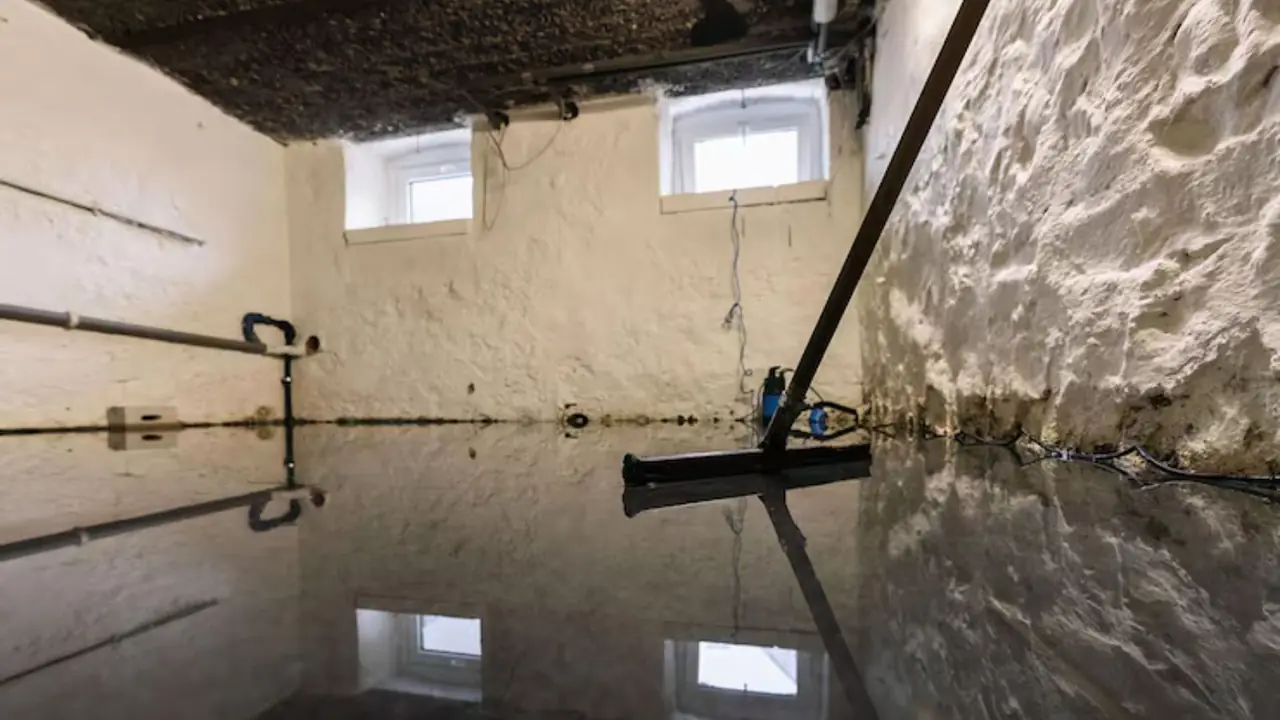
Getting rid of basement mold after a flood starts with the water, because mold has little to grow on once the moisture is gone. The first 48 hours decide how much has to be thrown away, and the next two weeks decide whether the room dries properly. This guide lays out that timeline day by day.
It covers a basement or cellar where one exists, and works just as well for a sunken room, a garage, a crawl space or a wall along the slab edge. If runoff reached any of them, the order of work is the same.
Before you touch anything: safety first
Under IICRC S500, floodwater coming from outside is classed as Category 3, which means grossly contaminated. Water that sits can also move from a cleaner category to a worse one, so a slow response changes the job. Keep people and pets out of standing water.
Stay out of any room where water has reached outlets, a panel or gas appliances. Switch the power off only if the panel is reachable while you stand fully dry, and put electrical or gas danger in the hands of the utility or 911 before any other call. Never wade into a flooded room to reach a switch. If sewage is involved, treat it as a separate contamination job and leave it alone until the source is stopped.
Day-range timeline
These ranges are rough planning guides, not promises. Big events, slow roads and equipment supply can push every step later, so call early.
| Day range | Main goal | What you do or a crew does |
|---|---|---|
| Hours 0 to 24 | Stop and document | Photos and video, safe power shut-off, begin pumping standing water |
| Day 1 to 2 | Remove what cannot dry | Pull soaked carpet, pad, loose drywall and wet insulation |
| Day 3 to 5 | Start structural drying | Air movers and LGR dehumidifiers, moisture mapping |
| Day 6 to 10 | Monitor and adjust | Daily readings, move equipment, open wet cavities |
| Day 11 to 14 | Confirm dry, decide on mold | Final readings, inspect for growth, plan cleaning or rebuild |
Need a hand with water or mold right now? Dispatch is open 24/7.
☎ Call (760) 769-1159Hours 0 to 24: stop the water and take photos
Get the water moving out. A submersible pump handles a few inches in a low room, and larger volumes call for truck-mounted extraction. A professional emergency water removal crew can pump and extract while you handle insurance details.
Photograph everything before you move it, including the waterline on the walls and the contents you plan to discard. Those dated photos support any claim later. Do not use a household vacuum on standing water and do not run electronics that sat in it.
Day 1 to 2: what to pull out
The EPA gives a 24 to 48 hour window for drying wet items and says porous materials such as carpet may have to go in the trash. After a flood from outside, those porous items also carry the contamination category of the water.
- Carpet and pad, which are usually removed after outside flood water
- Wet drywall, especially the lowest section that wicked water upward
- Fiberglass insulation in the wet cavities
- Particleboard shelving, stored cardboard and upholstered items
- Baseboards, so the wall cavity can breathe and dry
Day 3 to 14: what to dry and how
Concrete slabs, framing, solid wood and block walls can usually be dried rather than torn out. Air movers push air across surfaces while LGR dehumidifiers remove the moisture, and a thermal imaging camera plus a moisture meter show where water is hiding.
Drying equipment needs daily attention, because a wall that reads dry on day four may still hold water in the bottom plate. A crew doing structural drying records readings each visit and moves equipment as pockets clear.
Leave the equipment running until readings match a dry reference. Stopping early is how a room that looks fine becomes a room with a new stain in three weeks.
If mold shows up anyway
Growth after a flood usually means something stayed wet, such as drywall behind paneling or insulation under a sill plate. Do not paint over it, since the EPA says to clean and dry surfaces first.
Small patches on hard surfaces may be a DIY wipe-down, but spread across drywall or insulation the job moves to a crew that works under containment, the kind of mold remediation visit that needs a written scope. Health questions belong to your physician. Reconstruction waits until the structure is dry, then water damage repair replaces drywall, flooring and trim.
Insurance and records after runoff
Standard homeowners policies usually exclude flood damage, so a separate flood policy matters, while a burst pipe is often covered. Read your policy, question your insurer, and hold on to photos, receipts and equipment logs from the first days. Our flood damage restoration work covers storm and runoff water, but restoration crews are not waterproofers or plumbers, so a drainage fix may need another trade.
Twentynine Palms local note: flash runoff on dry ground
NOAA's 1991 to 2020 normals put yearly precipitation here near 3.87 inches, with monsoon thunderstorms behind a wettest month, August, of 0.65 inches. A big share of that yearly total can land in one storm on dry ground, so plan for fast runoff against walls and low rooms instead of steady rain.
The county's public works notice for July 2024 lists flooded roads and flood control facilities from monsoon rain in Zone 6, primarily Twentynine Palms. The Los Angeles Times noted that many affected residents had no flood insurance and lived outside flood zones. Ahead of the next monsoon season, ask what flood coverage would involve, and locate your address on the FEMA map.
The 2014 flash flood flooded Highway 62 in the east part of town with mud and debris, left drivers needing swift-water rescue on Adobe Road and Bagley Road, and cut power to about 2,000 homes and businesses. Plan for roads you cannot use and for days without grid power, and follow the NWS rule: turn around, don't drown.
Source type: Z107.7 local news report (2014), the EPA brief guide to mold, NOAA 30-year climate data, county flood control paperwork from 2024, a Los Angeles Times piece
Frequently asked questions
How can a flood in a desert town still lead to mold in a low room?
A dry climate does not stop a room from staying wet. Rain totals are small, near 3.87 inches in a normal year, but one monsoon storm pushes fast runoff against walls, and drywall or insulation that soaks and stays undried gives mold the moisture it needs.
Should I wait for the insurance adjuster before pulling carpet?
Photograph and document everything first, then remove wet materials that cannot be saved. Waiting days for an adjuster lets soaked material stay wet, so ask your insurer how they want documentation handled and keep samples if they request them.
Can I use my own fans and a rented dehumidifier instead?
For a small, clean-water event, possibly. After outside flood water, professionals use moisture mapping and daily readings to confirm the structure is dry, and consumer equipment rarely tells you what is happening inside the wall.
What if I'm in Joshua Tree or Yucca Valley and not in town?
Crews dispatch from Twentynine Palms and cover Joshua Tree and Yucca Valley, with same-day response when available and no promised arrival time.
Talk it through with dispatch any hour of the day.
☎ Call (760) 769-1159