
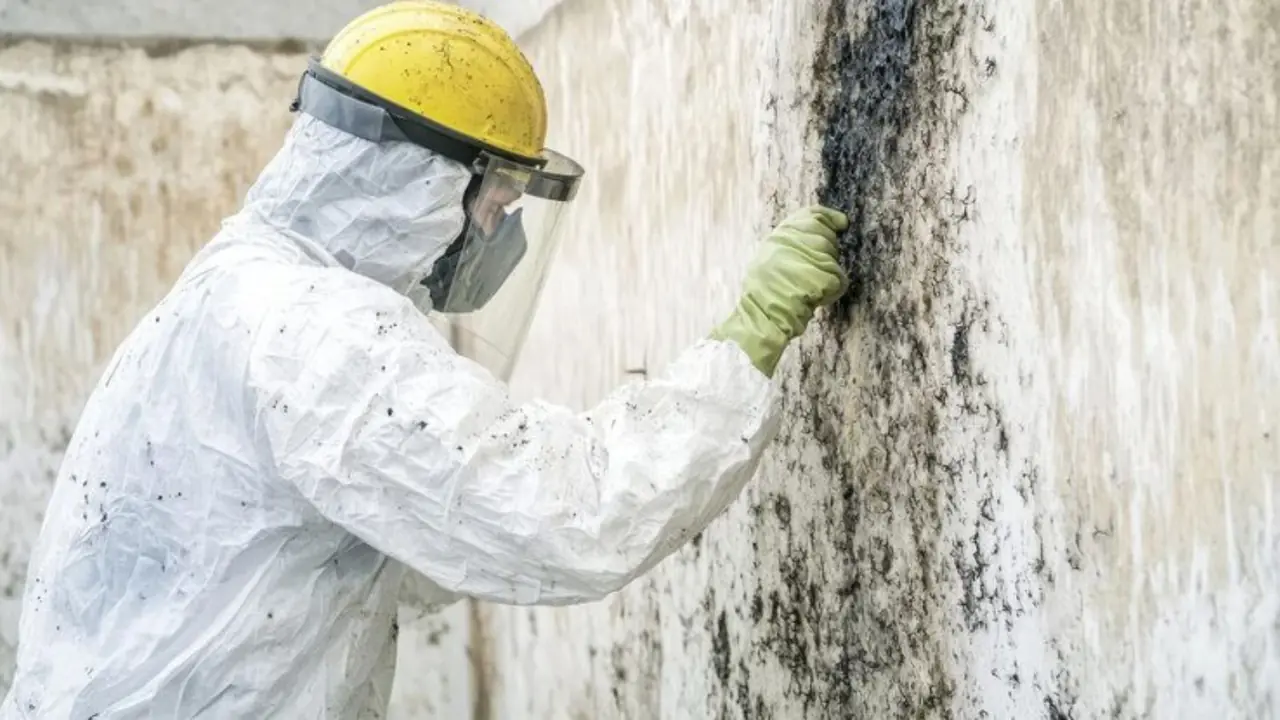
Black mold on basement walls looks alarming, but the color tells you very little. Only lab testing can name what is growing, and the wall material decides the work either way. Drywall, paneling, painted block and framing each get a different answer.
This guide fits a basement or cellar if you have one. It fits an interior garage wall or a closet backing onto a slab just as well. Start by finding out what the wall is made of, then use the table to see what usually gets cleaned and what usually gets cut out.
Find out what the wall is made of
Knock on it. A hollow sound with a papery surface points to drywall, thin grooved sheets point to paneling over furring strips, and a dull, dense sound with pitted paint points to block or poured concrete. A small inspection hole beside an outlet cover or in a closet corner often shows what sits behind.
Check the paint too. Bubbling, flaking or chalky white crust on masonry suggests moisture moving through the wall. The crust itself is typically mineral salts, not mold, but it marks a wet wall.
Wall materials at a glance
Porous materials hold moisture and growth inside them, while hard masonry can usually be cleaned and dried. The right-hand column is where a crew would change the call.
| Wall material | Cleaned or cut out | What changes the call |
|---|---|---|
| Painted drywall | Cut out | Growth on the paper face or a soft, swollen board |
| Wood or hardboard paneling | Usually removed, back side checked | Dark growth behind the sheet or a warped panel |
| Painted poured concrete | Cleaned, then dried | Peeling paint that hides a wet wall |
| Concrete block (CMU) | Cleaned, then dried | Wet cores or a source of water outside the wall |
| Wood studs and plates | Cleaned under containment | Soft, crumbly or deeply stained wood |
| Fiberglass batt insulation | Removed | Contact with a wet wall or visible staining |
| Rigid foam board | Often wiped | Wet seams, damaged facing or growth behind it |
Need a hand with water or mold right now? Dispatch is open 24/7.
☎ Call (760) 769-1159Drywall and paneling: the porous problem
Drywall has a paper face over a gypsum core that soaks up water like a sponge. Growth on the paper means the core is wet too, so the board gets cut out past the visible edge into clean, dry material, with a moisture meter guiding where to stop. The EPA guide says absorbent materials can end up in the trash once they are moldy.
Paneling hides the worst of it behind the sheet. Pull one panel at a corner and look at the back and at the wall behind. Painting or re-covering over stains does not remove growth, and S520 practice treats removal and moisture correction as the work.
Painted concrete and block
Concrete and block are the walls most likely to be cleaned rather than torn out. A crew removes loose paint, cleans by HEPA vacuuming and damp wiping or by abrasive methods under containment, then dries the wall. Block cores can hold moisture, so readings matter more than appearance.
Paint that is sealing in moisture can fail again, so the real fix is finding where water enters. A downspout dumping at the foundation, a cracked slab edge or a leaking hose bib are common suspects, and a plumber or masonry contractor handles those repairs.
Framing and insulation
Studs and bottom plates are solid wood, so surface growth on sound framing can often be cleaned, and the wood dried to match unaffected framing nearby. Wood that is soft, crumbly or stained through gets evaluated by a professional, and sometimes by a builder if structure is involved.
Fiberglass batts are different. They trap moisture against the wall, cannot be washed, and usually go in the bag when they touch a wet or stained surface. Rigid foam board can often be wiped, though wet seams or damaged facing change that.
Wall safety checklist before cutting or scrubbing
Walls hide wiring and plumbing, so a little planning prevents expensive surprises.
- Switch off the circuits that run through the wall before any cutting, and confirm they are dead.
- Check for water pipes in the wall first, since a nicked supply line makes a bigger problem than the one you started with.
- Use a damp cloth rather than a dry scrub brush on hard surfaces, to keep dust down.
- Bag removed material before carrying it through the house.
- Stop and call a professional if the damaged area is larger than you can reach comfortably or sits behind a ceiling.
Photograph and measure before anything comes out
Take wide and close photos, note each wall's material and measure each affected area before demolition. Keep a few damaged samples if the insurer asks. This record helps a crew scope the job and helps you if a claim is involved.
If the growth covers more than about 10 square feet, sits behind finished walls or followed sewage or outside flood water, hand the work to professionals. Our mold remediation crews work in containment, and rebuilding afterward falls under water damage repair. Whether opening walls or rebuilding needs a permit is a question for the City of Twentynine Palms building department.
Closing the wall back up the right way
Nothing gets closed until the framing and masonry read dry against unaffected material of the same kind. Closing a wall over damp studs or a damp block face gives growth a fresh start behind new drywall. Ask for the moisture readings in writing before the rebuild is scheduled.
A few choices help the rebuilt wall. Leave a small gap at the bottom of new drywall instead of sitting it on the slab, and consider paperless or moisture-resistant board for the lowest course. Use mold-resistant paint only as a finish, since it cannot dry a wet wall or replace a repaired water source.
Plan the order of work. Source repair comes first, drying second, removal and cleaning third, and rebuilding last. A crew that offers to start with paint is skipping three steps.
Twentynine Palms local note: storm water and walls
Per a San Bernardino County Public Works notice, monsoon rain in July 2024 flooded the Zone 6 flood control district, mostly in Twentynine Palms, and damaged roads and flood control facilities. The Los Angeles Times added that homes were hurt, and that many people affected were living beyond mapped flood zones and were uninsured for flood. A dark wall that appeared after that kind of event may come from outside water, which changes both the cleanup and the claim.
Do not assume anything yet. See what your policy says about flood, and pull up the FEMA map for your address. Photograph each wall before removal so you have a record if the cause turns out to be runoff.
Source type: County Public Works notice on CEQAnet (2024) and a Los Angeles Times article hosted by UCLA IOES
Frequently asked questions
If my Twentynine Palms home is outside a flood zone, can storm water still damage a wall?
Yes. News coverage of the 2024 monsoon found that plenty of hit households sat outside flood zones. Pull up the FEMA map for your address, and have your insurer spell out what the policy does and does not cover.
Can I just paint over black spots on a block wall?
Paint does not remove growth and may trap moisture, which lets the wall fail again. Clean and dry the masonry first, find where the water comes from, and only then consider a coating. We also serve Landers and Yucca Valley.
Does the color black mean a dangerous type of mold?
Color cannot identify a mold, and the material and moisture matter more for the work. Questions about health belong with a physician.
Is mold work licensed here?
Find out if your state licenses mold work, and put the S520 question to every company you talk to. We can say only that our restoration professionals are licensed and insured.
Talk it through with dispatch any hour of the day.
☎ Call (760) 769-1159