
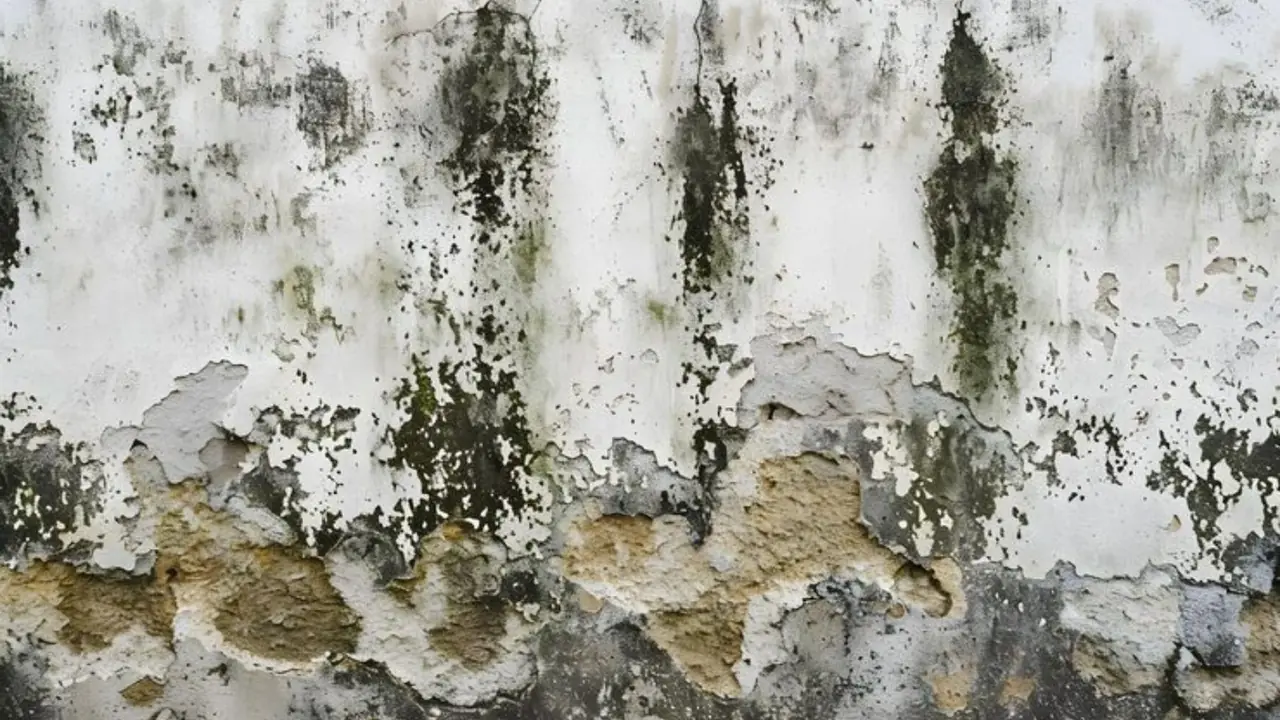
A dark stain on a wall, a fuzzy patch on a closet baseboard, a grey bloom on the concrete beside a stairwell. The first search many homeowners run is black mold in basement, and the answers are loud and contradictory. This guide separates the claims that get repeated from the facts a restoration crew actually works with, for homes in Twentynine Palms, CA.
Your house may or may not have a basement, and it does not change the advice. Everything below applies just as well to a closet, a bathroom wall, a slab-edge wall, a garage corner or any below-grade room.
The short version is simple. Color does not name a mold, a test describes a sample and not your whole house, and the question that matters most is where the water came from.
Eight claims, sorted into myth and fact
These are the statements homeowners repeat most often.
| The claim | Verdict | What is actually true |
|---|---|---|
| Black color means a specific, serious type of mold | Myth | Color depends on the species, the surface, the age of the growth and the light. Many different molds look dark, and nobody can name one by eye. |
| White or green growth can be ignored | Myth | Light colors are not a clearance. Any growth means moisture has been present, and that is the part to deal with. |
| A home test kit tells you how bad it is | Myth | A kit or lab result describes the sample taken on the day it was taken. It does not map hidden growth or measure the size of the problem. |
| Wiping the surface solves it | Myth | A clean surface looks better. If the wood or drywall behind it is still wet, the conditions that supported growth are still there. |
| Mold only follows a flood | Myth | A slow supply line weep, a condensate line, a roof leak or a damp slab edge can supply enough water over time. |
| Mold needs moisture to grow | Fact | Without a continuing water source, growth has nothing to keep it going. Finding and stopping that source comes first. |
| Published standards exist for this work | Fact | ANSI/IICRC S520 covers mold remediation and S500 covers water damage. Put the question to each bidder directly: do your crews follow these two? |
| Health questions belong to a physician | Fact | A restoration company and a tester can speak to the building. Symptoms and risk are a doctor's question. |
Why color tells you almost nothing
Walk into three basements, closets or garages with dark staining and you could be looking at three different things. One might be mold, one a mineral deposit left behind by evaporating water, and one a film of dust and soot stuck to a damp surface. Only a sample read by a lab, or a trained inspector weighing the whole situation, can say which.
Efflorescence is the classic mix-up. It is a white, chalky crust that forms on concrete and masonry when water carries salts to the surface and then dries off. It is not mold, but it tells you water is moving through the material, which is the same question you would ask about mold.
So treat color as a prompt to look for water, not as a diagnosis. A dark patch beside a water heater, under a window sill or along the base of a wall deserves the same moisture check whatever it looks like.
Need a hand with water or mold right now? Dispatch is open 24/7.
☎ Call (760) 769-1159What a mold test can and cannot say
Mold testing means collecting a sample. That might be a swab or tape lift from a surface, a small piece of material, or an air sample drawn over a short window. A lab then reports what it found in that sample.
A test can confirm that growth is present where you sampled, and an air sample can be compared with an outdoor sample taken at the same time. It cannot tell you how much sits behind a wall, whether growth will return, or how it affects any particular person.
Testing works best when it answers a question you decided on beforehand, such as whether a cleaned area has cleared. If you want a test, hire an independent tester who does not also sell the removal work, so the result and the sales pitch come from different people.
The moisture source is the real finding
Whatever the stain is called, the repair plan is built around water. A moisture meter reads dampness inside the material, and a thermal imaging camera shows cool patches that suggest wet areas behind a surface.
Typical sources include a pinhole leak in a copper supply line, a water heater weeping at the base of a closet, a washing machine hose, or a garage wall that stays damp where runoff meets the slab. Each needs a different fix and a different trade.
Until the source is stopped, any cleaning is temporary. That is why a crew starts by finding and measuring moisture, dries the structure with air movers and LGR dehumidifiers, and only then talks about removing materials. You can read how containment and removal fit in after drying on the mold remediation page.
What to do with a dark patch this week
Photograph the patch with a tape measure or coin beside it, note the date, and look for water nearby.
Once water reaches outlets, the panel or a gas appliance, the job changes. Keep out of the room. Kill the power at the panel only if you can get there on dry footing, and if electrical or gas danger is possible, contact the utility or 911 before dialing us.
- Look for a drip, a stain ring, a damp smell or a cold, clammy surface
- Check the plumbing, water heater, AC condensate line and any roof area above
- Do not sand, scrape or dry-brush the patch, because that moves material into the room
- Keep fans from blowing across it toward other rooms
- Call a plumber for an active leak and a restoration company for wet materials
Who does what: plumber, tester, crew, physician
A plumber stops a plumbing leak. A roofer deals with a roof leak. A septic contractor handles a septic problem. A restoration company is not any of those, but it dries the structure and removes damaged material once the source is stopped, using structural drying and moisture mapping and, where growth is involved, containment barriers and HEPA air scrubbers.
Insurance is separate. Coverage tends to follow the cause: a sudden accident is often covered, a long-running leak or neglect often is not, and floods usually sit outside a standard policy and need their own flood coverage. Your policy language settles it, so read it or ask your insurer first.
Our crews work from Twentynine Palms and serve Joshua Tree and Yucca Valley as well. Before work starts, you hear the scope and the price.
Twentynine Palms local note: short, hard rain on dry ground
Annual precipitation in the NOAA 1991 to 2020 normals is roughly 3.87 inches, and August, fed by monsoon thunderstorms, leads the calendar at 0.65 inches. That means a single afternoon cloudburst may dump a meaningful slice of the year's total onto hard, dry ground. If a dark patch on a slab-edge wall or garage wall appeared after a storm, runoff is a first suspect, not slow humidity.
For July 2024, San Bernardino County Public Works reported monsoon flooding with damage to roads and flood control facilities, centered on Zone 6 and primarily Twentynine Palms. The Los Angeles Times coverage noted houses were damaged, and that numerous residents hit by it were outside flood zones and uninsured against flood. The FEMA flood map and the flood section of your policy are the two documents to read.
Source type: NOAA normals, a county flood control notice from 2024, and Los Angeles Times reporting
Frequently asked questions
Can a Twentynine Palms monsoon storm cause mold in a house that is otherwise dry?
It can if water gets in and stays. Runoff against a slab edge, a roof leak during a thunderstorm or a wet garage wall can leave materials damp, and mold needs moisture. If water entered, dry it fast and have damp materials measured. Storm and runoff water is a matter for flood damage restoration.
Should I test the mold before I call a restoration company?
Not necessarily. Stop the water first, then ask what question a test would answer. A sample describes one spot on one day, and an independent tester can advise whether it is worth doing.
Will my insurance cover mold?
That depends on the policy and on how the moisture arrived. Coverage often hinges on cause. An abrupt accident may be covered while a slow, ongoing leak may not. Read your policy or ask your insurer.
Talk it through with dispatch any hour of the day.
☎ Call (760) 769-1159