
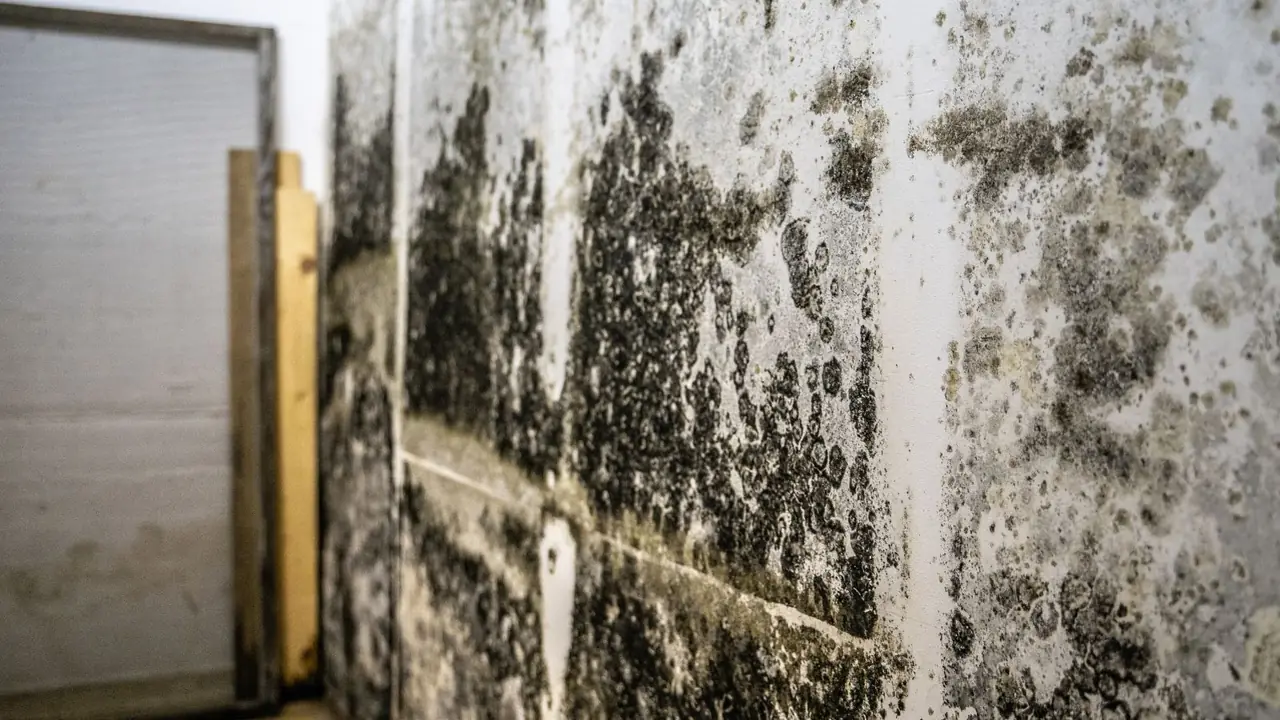
Basement mold removal in Twentynine Palms, CA starts with a decision, not a spray bottle. Some growth is a small surface job you can finish in an afternoon. Other growth sits behind finished walls or is still being fed by a leak, and that belongs to a trained remediation crew.
Should your house include a basement, cellar or sunken lower room, this guide applies directly. Without one, the same logic fits a slab-edge wall, a closet against an exterior wall, a garage corner or a crawl space. What matters is how low the space sits, how wet it got and what the surfaces are made of.
Four questions that decide who does the work
Ask them in order. How big is the affected area, where is the moisture coming from, what is the growth sitting on, and could there be more behind a surface you cannot see? One bad answer is enough to push the job toward a professional.
Size has a published reference point. The EPA's brief guide to mold says that if the moldy area is less than about 10 square feet, you can in most cases handle the cleanup yourself. That is roughly a patch three feet by three feet, so measure with a tape instead of guessing.
Size alone does not settle it. A 6 square foot patch on a painted block wall that dried weeks ago is a very different job from a 6 square foot patch on drywall that is still cool and damp to the touch.
Decision table: DIY, professional, or stop and call
Use the table as a screen, not a verdict. If your situation lands in the right-hand column on any single row, treat the whole job as a professional one until someone has looked at it.
| Factor | Usually a DIY job | Usually a professional job |
|---|---|---|
| Size | Under about 10 square feet, one patch | Larger, several patches, or growth you cannot fully measure |
| Moisture source | Found, fixed and the area is dry | Unknown, recurring, or still active |
| Material | Concrete, block, sealed wood, metal, tile | Drywall, insulation, carpet and pad, particleboard |
| Hidden growth | Nothing behind the surface, readings are normal | Musty smell with nothing visible, stains that return |
| Water type | Clean supply line or condensation | Flood water, runoff or sewage |
| Air handling | Space is closed off from living areas | Ductwork or returns pass through the room |
Need a hand with water or mold right now? Dispatch is open 24/7.
☎ Call (760) 769-1159What a careful DIY cleanup looks like
A DIY job still needs a method. Fix the moisture source first, dry the area, then clean hard surfaces with detergent and water and let them dry fully. Skipping the drying step is the most common reason a cleaned patch looks bad again a few weeks later.
Wear gloves, eye protection and a fitted respirator, and keep a fan pushing air out through a window or door instead of into the house. Bag porous scraps before you carry them through the home.
- Measure the area and take dated photos before you start
- Confirm the moisture source is fixed and readings are dry
- Scrub non-porous surfaces, wipe, then dry with fans or a dehumidifier
- Do not paint or caulk over mold, the EPA says to clean and dry the surface first
- Stop and reassess if the patch grows past your measured area
Materials that rarely clean up, and surfaces that do
Material type often decides the question faster than size. Per EPA guidance, ceiling tiles and carpet are often discarded after mold takes hold, and wallboard paper, fiberglass insulation and pad belong in that same pile.
Concrete floors, poured walls, glazed tile, metal framing and sealed lumber are far more forgiving. A below-grade room with a bare slab and block walls may be a DIY candidate. The same room with carpet, paneling and a drywall ceiling usually is not.
Hidden growth in low rooms
A musty smell with no visible growth is a reason to look deeper, not a reason to add air freshener. Growth hides behind baseboards, under flooring, inside wall cavities and above drop ceilings, all places where a wipe-down cannot reach.
Moisture meters and thermal imaging cameras let a crew find wet framing and drywall without cutting open every wall. If a stain keeps returning after you clean it, assume the water is still arriving and have the wall checked before you scrub again.
What to ask before a crew starts
A remediation company should explain scope and price before work begins, and put the scope in writing. A proper crew seals off the work area and filters the air before any material comes out, which is how a mold remediation job should start.
Ask whether the crew works to ANSI/IICRC S520, the published standard for mold remediation, and ask whether your state licenses mold work. Rebuilding is usually separate from removal, so ask who handles drywall and flooring repair afterward.
- Written scope, including what gets removed and what gets cleaned
- How the work area is contained from the rest of the house
- How the moisture source is handled, since a plumber or roofer may be needed
- Whether any testing is proposed, and what it would change
Honest limits of restoration work
Restoration crews dry and clean. We are not waterproofing contractors, plumbers or septic companies, so a leaking foundation wall, a failed supply line or a backing-up septic tank needs the right trade alongside us. Health questions belong to your physician. Crews drive out from Twentynine Palms to Joshua Tree and Yucca Valley too, so a Morongo Basin address does not change the decision framework above.
Twentynine Palms local note: a dry climate with sudden water
NOAA's 30-year normals put yearly precipitation under four inches, and even the peak month, August, brings only 0.65. Because the climate is so dry, a musty lower room is worth tracing to a specific event or leak instead of blaming the weather, and that trace is the first step of any decision above.
When rain does arrive it arrives hard. County public works paperwork from July 2024 describes monsoon flooding that hit roads and flood control structures in Zone 6, mostly in Twentynine Palms. Reporting in the Los Angeles Times found numerous flooded residents were not in mapped flood zones and held no flood policy. Read your own policy, and check the FEMA map for your address, before you count on coverage.
Source type: The EPA's brief guide to mold, NOAA 30-year normals, county public works paperwork on CEQAnet, and Los Angeles Times reporting hosted at UCLA IOES
Frequently asked questions
Can a house in a desert town like Twentynine Palms still get mold?
Yes, because mold needs moisture and not a wet climate. In a place this dry, water usually gets in through plumbing leaks, irrigation or roof runoff touching a wall, condensation, or the odd monsoon storm pushing water at a foundation.
Is painting over mold or sealing it with primer acceptable?
No. The EPA says not to paint or caulk moldy surfaces and to clean the mold and dry the surface first. Coating a damp patch hides it for a while and leaves the moisture problem in place.
Does homeowners insurance cover mold removal?
It depends on the cause and on your policy. Sudden events such as a burst pipe tend to be covered, while slow leaks and neglect tend to fall outside coverage, and floods typically need a separate flood policy. Ask your insurer before work starts and keep your photos and records.
Should I pay for testing before hiring a company?
Not automatically. Testing and remediation planning follow S520 practice, and a good question for any company is what a test result would change about the scope. Visible growth plus a moisture source already tells you the first steps, which are to stop the water and dry the area.
Talk it through with dispatch any hour of the day.
☎ Call (760) 769-1159